When someone else puts the robot to bed
Put to bed by someone else, the robot kept tracking my face and making noises. It now understands it has been put to bed, and a startle no longer makes it lose my face.
Every log, newest first. Filter by part of the robot.
Put to bed by someone else, the robot kept tracking my face and making noises. It now understands it has been put to bed, and a startle no longer makes it lose my face.
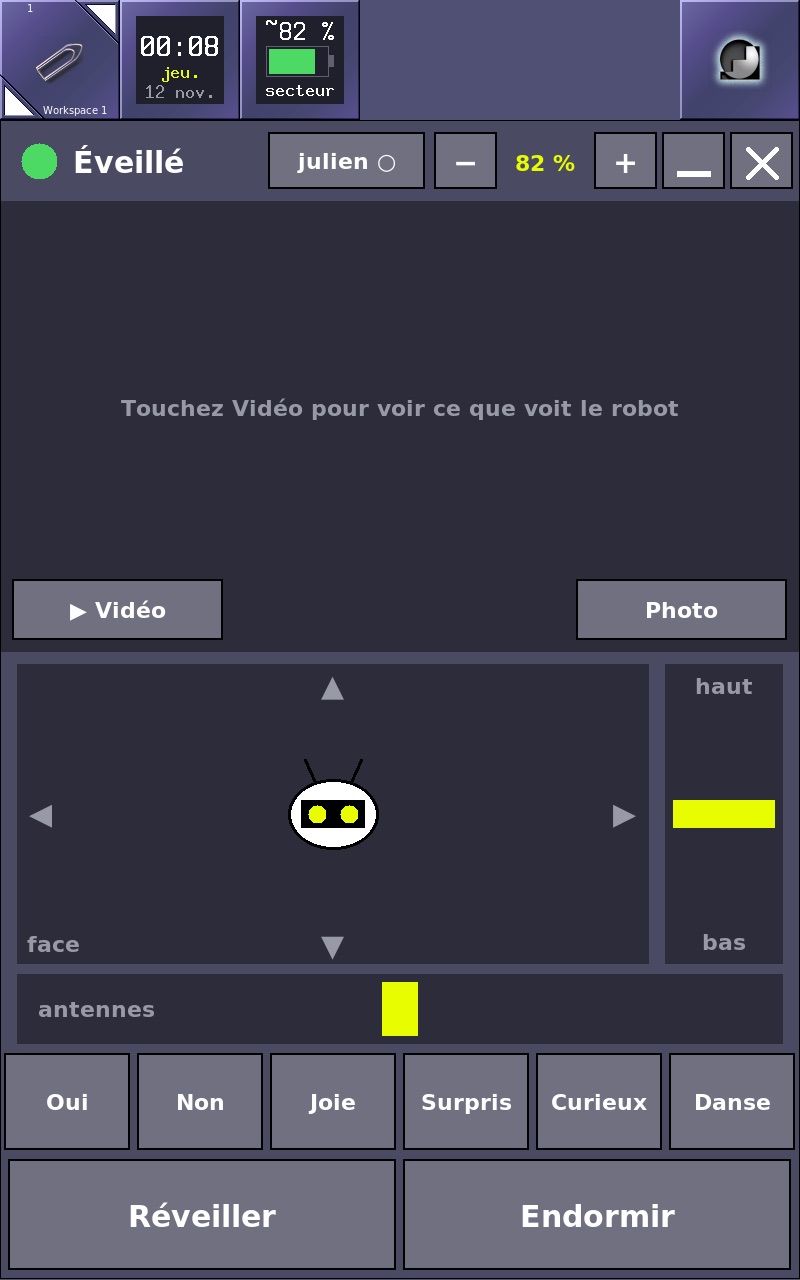
The revived Galaxy Note becomes the robot's remote: a small app written for it that drives the robot over Wi-Fi and shows what its camera sees, thanks to a Raspberry Pi.
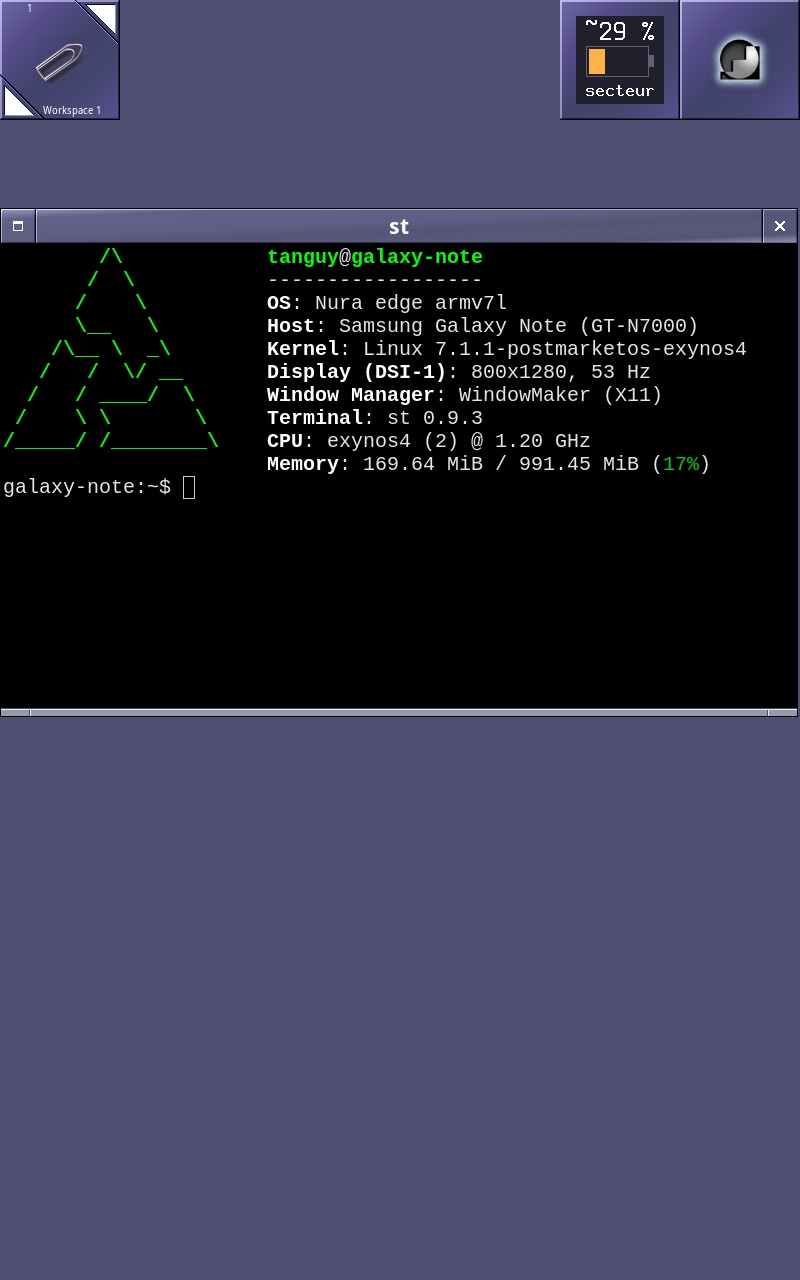
A 2011 phone, a new battery, a recent Linux installed without a USB cable, and a pen the kernel had to be told about. The goal: give the robot a screen.
Two movements requested at once no longer blend: the second is refused. And when an app stops, the robot no longer goes to bed by itself. Two changes to account for.
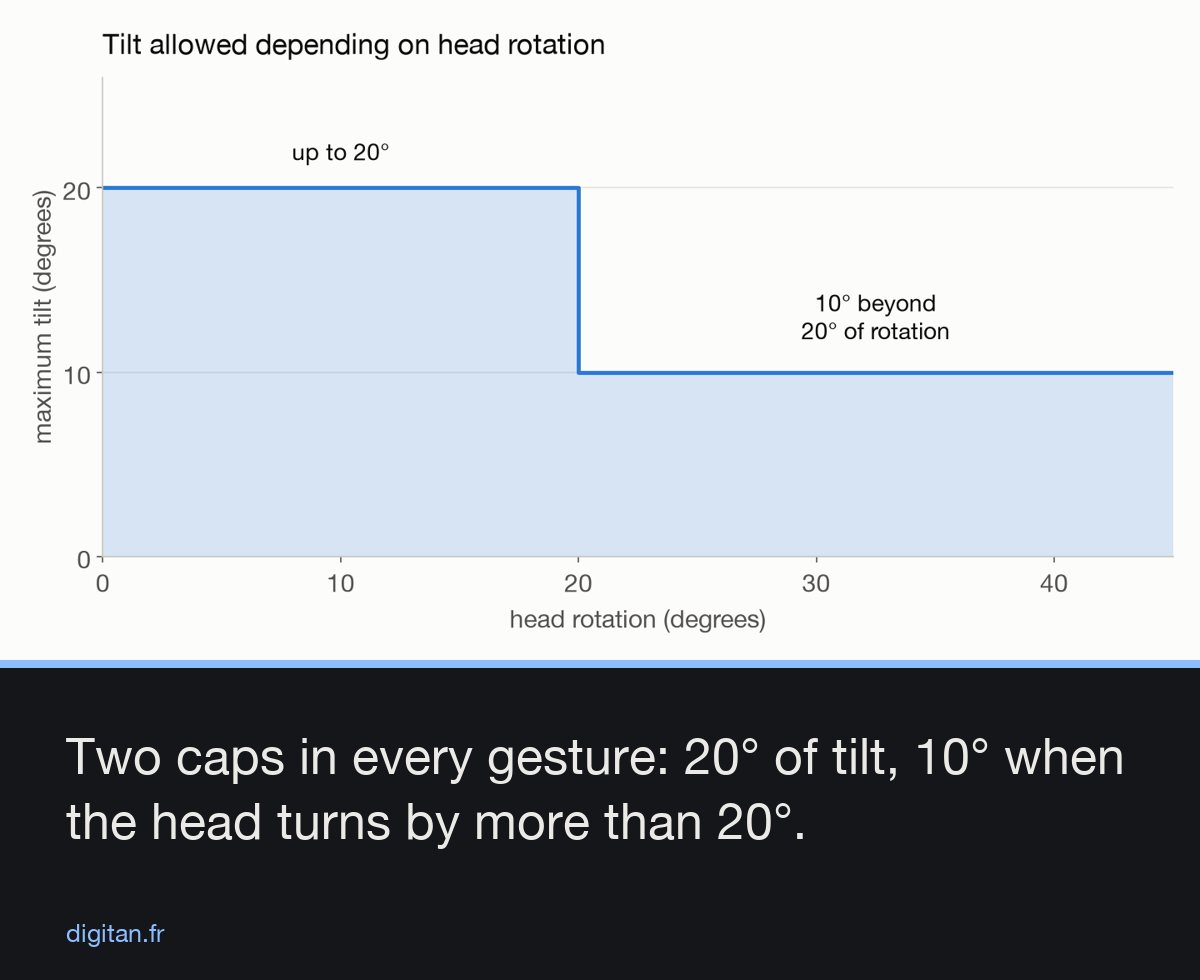
Four lock-ups in one week. A gesture that copied the wrong position, a start that was too abrupt: how to free the head, and what stops it from happening again.
About three hours asleep, between 1 h 35 and 2 h 23 awake. A gauge right within a few minutes, a green LED that lies, and an empty battery that makes it reboot in a loop.
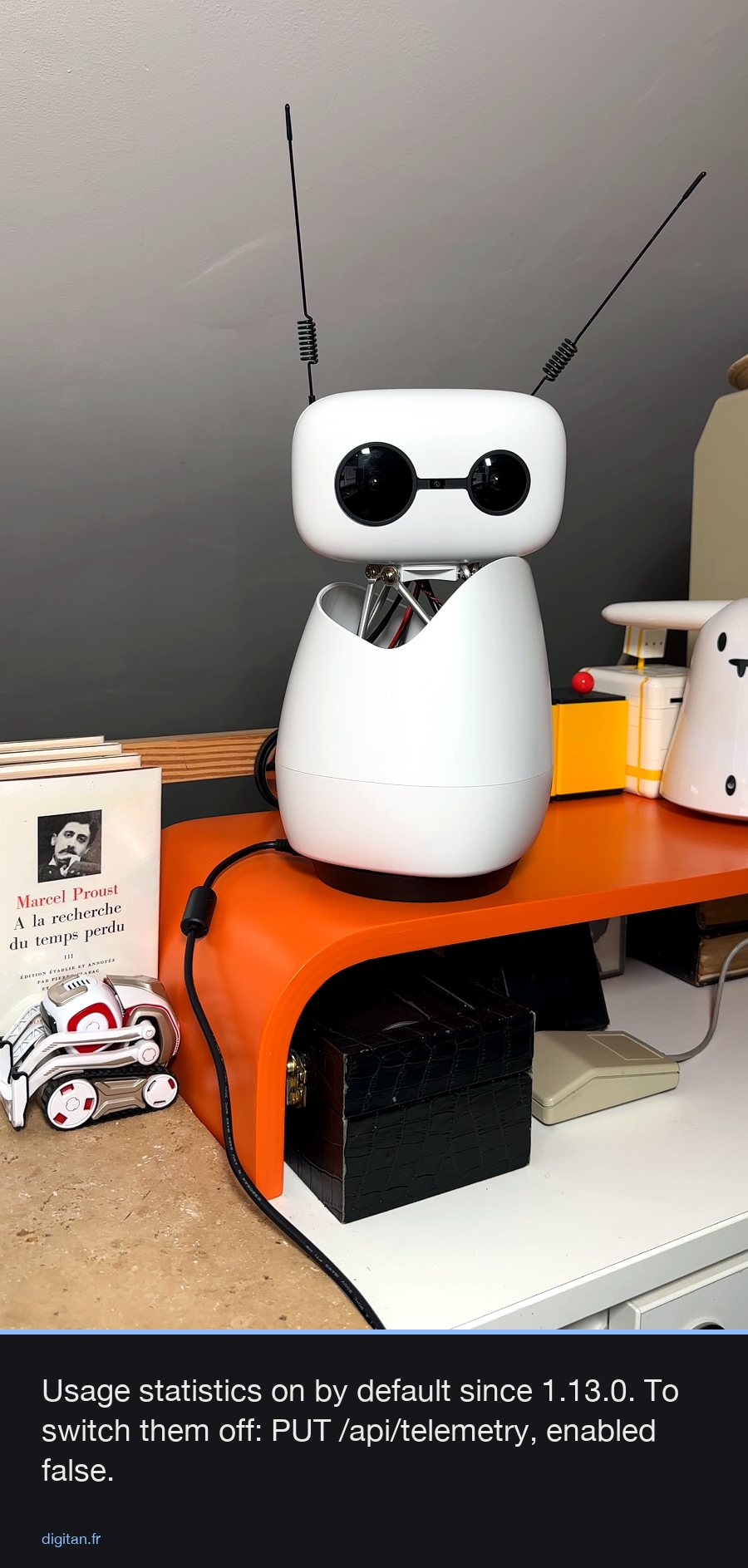
Since version 1.13.0, the robot software sends anonymous usage statistics, switched on by default. What the code says, and how to turn them off.
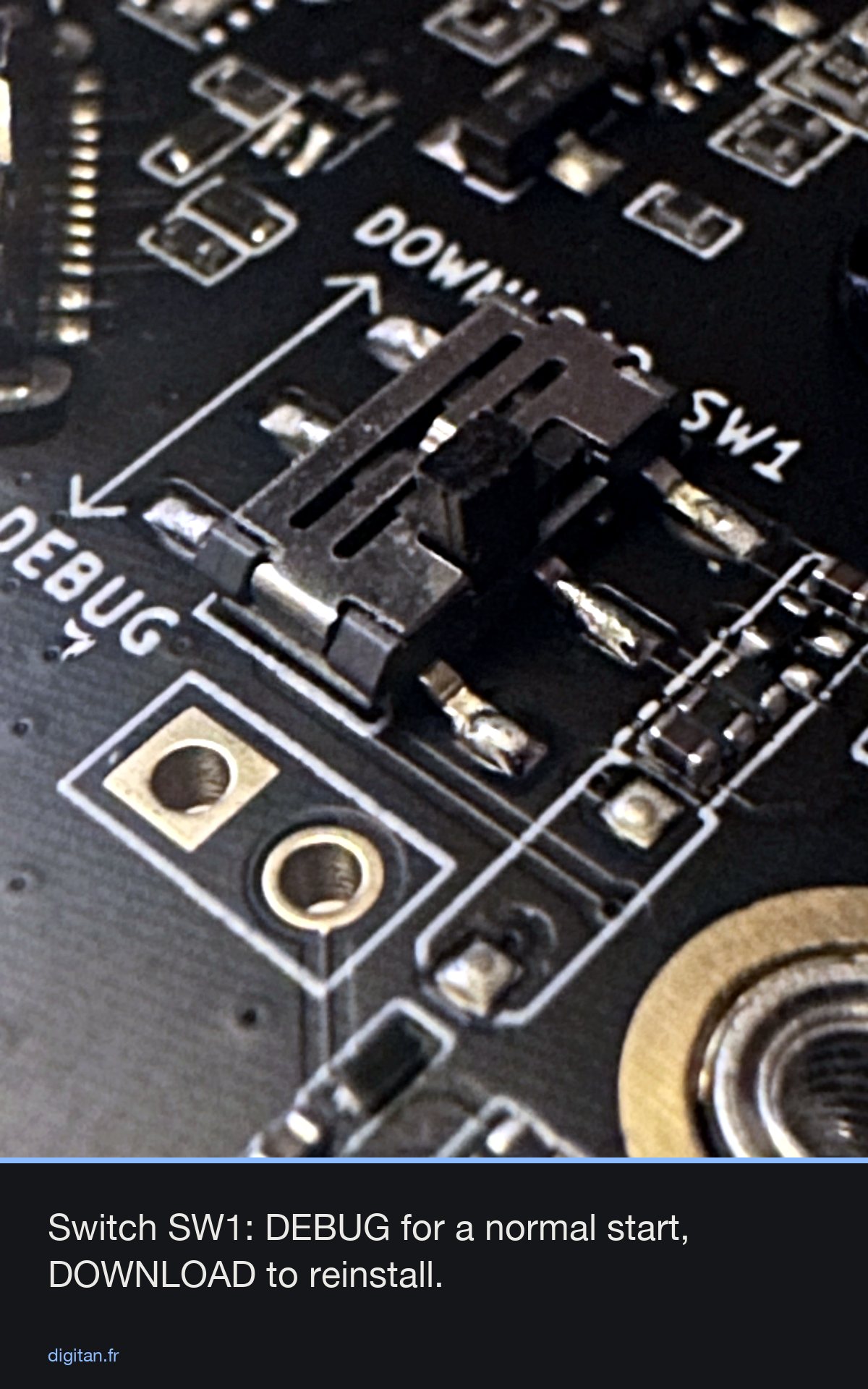
Sleep mode now really puts the robot to bed: head tucked in, motors off, woken by a push on an antenna. And why it does not restart on its own after a power cut.
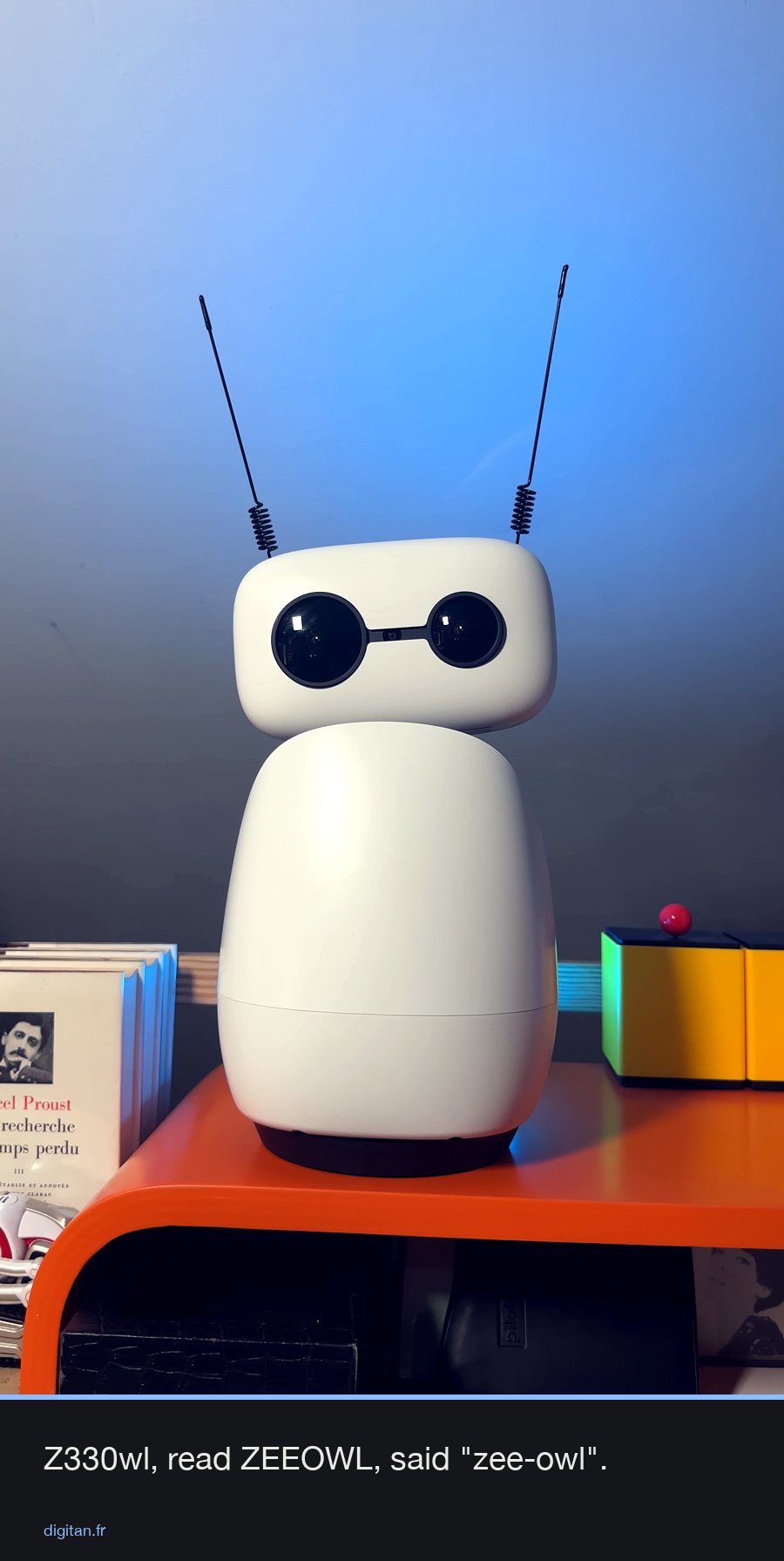
Z330wl, read ZEEOWL, said "zee-owl". You can hear the owl in it. How the name came about, and what helps it stick.
The robot does not show its battery level. Its nine motors, though, know the voltage that feeds them. One reading, an energy tile, and a trap while charging.
No network, not a single LED on the head board, restarts that changed nothing. I thought the board was dead. It was the power cable from the base, out of its connector.
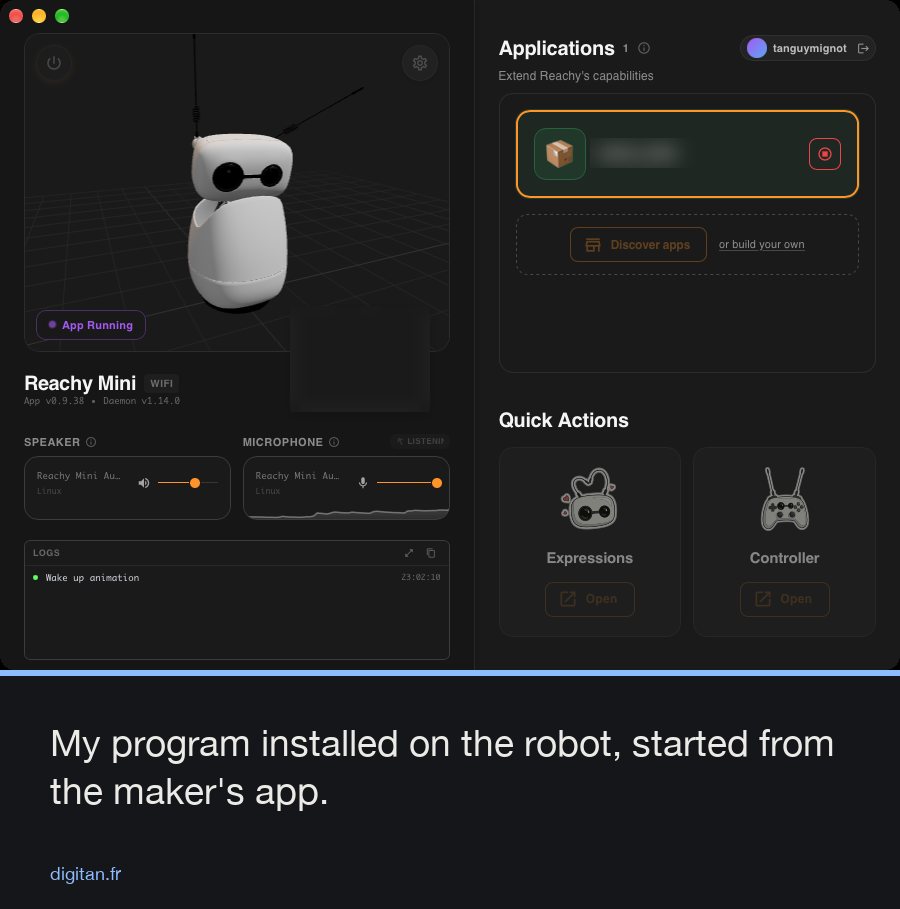
With its camera view open, the maker's desktop app pushes the robot's load to 7 on 4 cores. Closed, it drops back to 2.4. Measurements and one simple rule.
A rare timing error, a program that only knew how to catch network errors, and a robot left with its motors powered for about twenty hours. Two rules since.
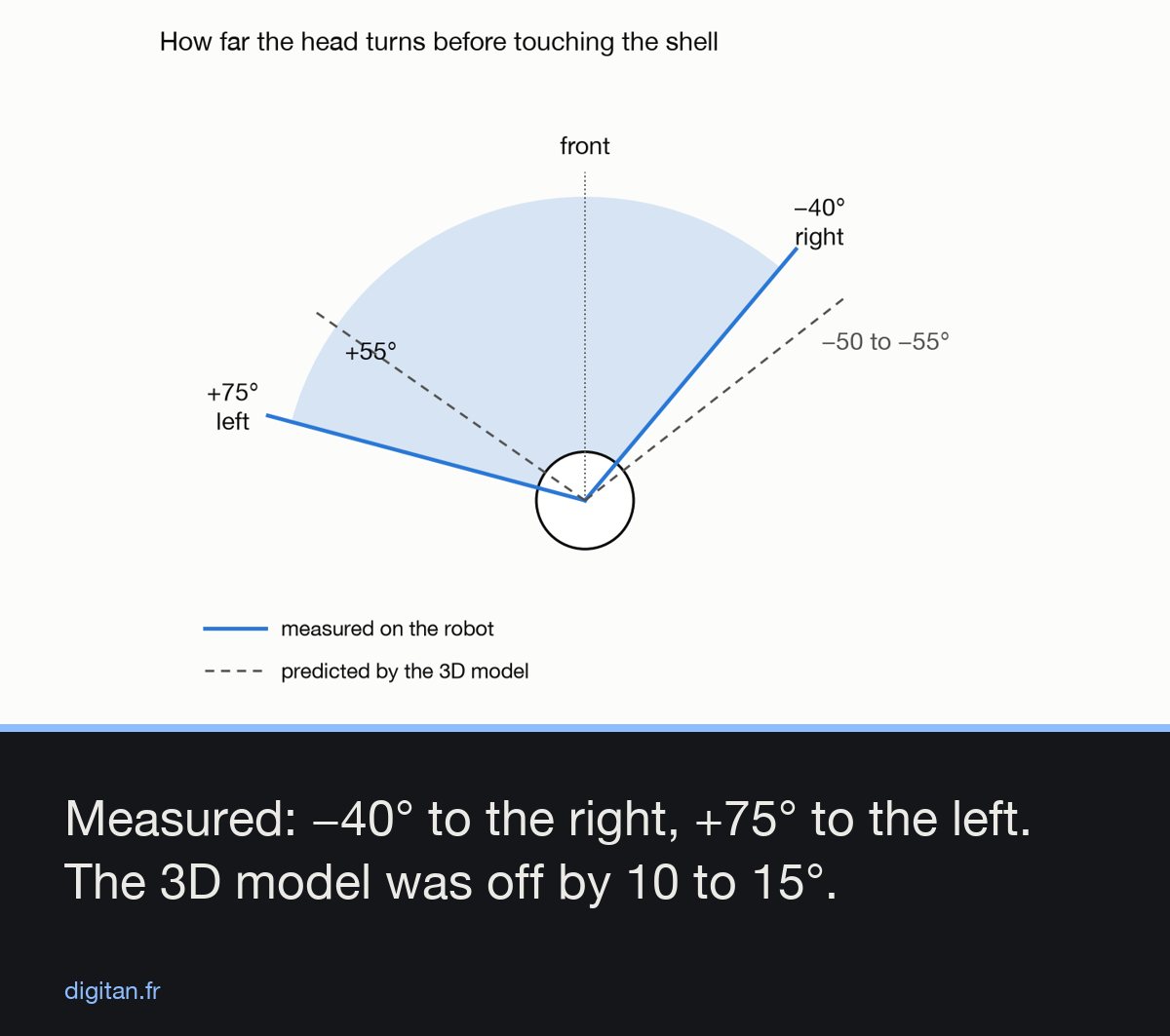
A tilted head, no reaction, a restart. The maker's 3D model was off by 10 to 15 degrees, so I measured the limits on the robot: −40° on one side, +75° on the other.
Teaching a desk robot manners: a greeting when I look at it, at most every 20 minutes, and a purr where the antennas beat ±4 degrees in 0.15 s.
Before teaching more tricks, a frame: modes I choose, states the robot works out, a badge that always says which, a real sleep, and a way to call me without a word.
Stop recognising every image: follow each face as a track, name it once, check it every three seconds, and look less often when nothing happens. Measured: a third less load.
My desk robot's Raspberry Pi CM4 was at 96%. A budget, thread by thread, about 750 ms of work per image, and a one-line change that halved my program's load.
291 reactions in 56 minutes. How thresholds, rest periods and habituation brought my desk robot down to one reaction every 35 seconds, and why that was still too much.
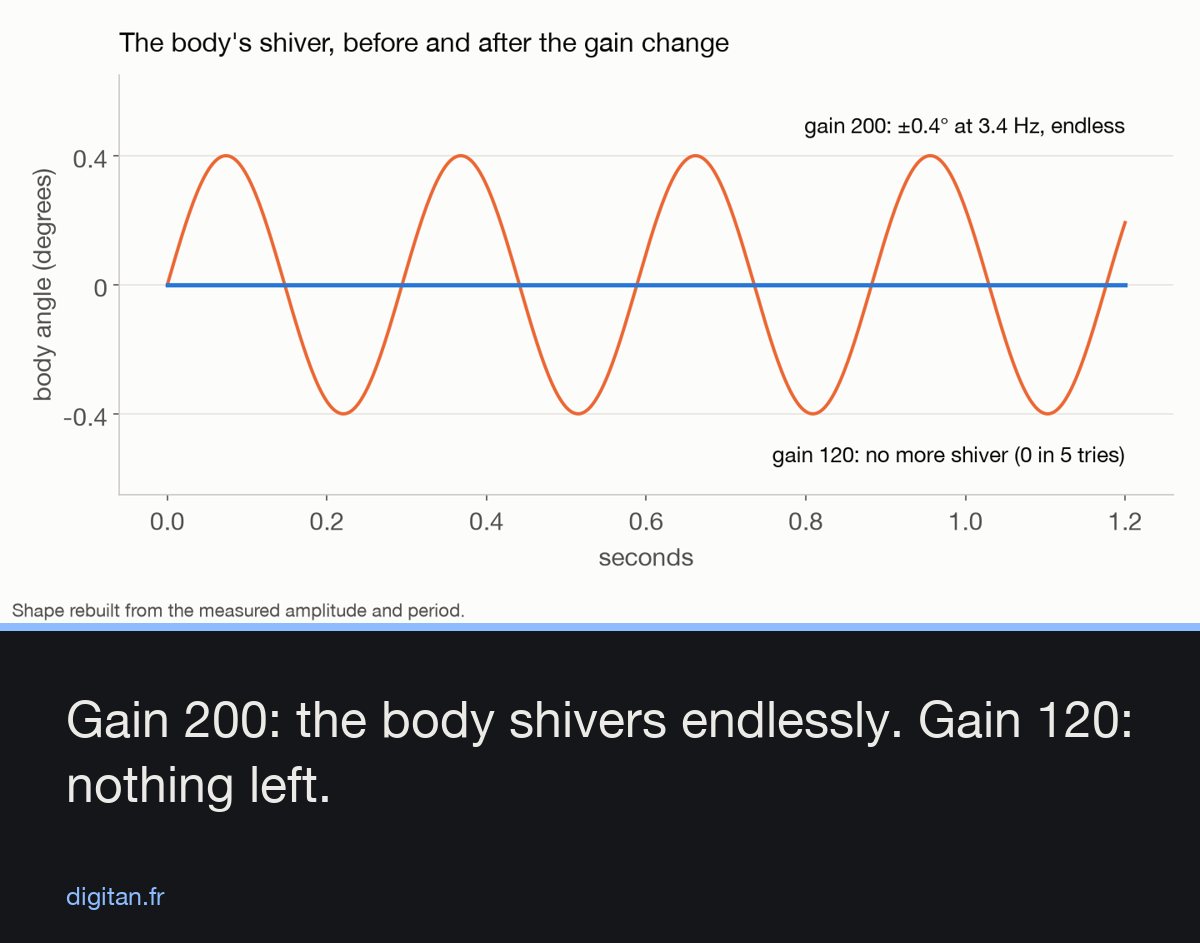
A tiny left-right oscillation after some movements. Measured, explained as a limit cycle of the body's servo, and fixed by lowering one gain from 200 to 120.
A desk robot should not need a laptop. Benchmarks on the Raspberry Pi CM4 inside, a first launch on board, and the antenna that starts everything.
Face recognition with two small OpenCV models, measured: 180 correct verdicts out of 184 sitting at my desk, and a surprise when I stood up.
Two sittings, about two hours and twenty minutes of filmed assembly, a first boot that worked, and the first things I changed.
On delivery day I read the robot's community support channel before opening the box: about 8,700 messages, ten months of other people's mistakes.
Where this project comes from: an AI assistant that lives in text files, a small open-source robot ordered on 6 September 2026, and a plan.