A real night
- Log
- 18 of 25
- Date
- Reading
- 1 min read
Skills in this log
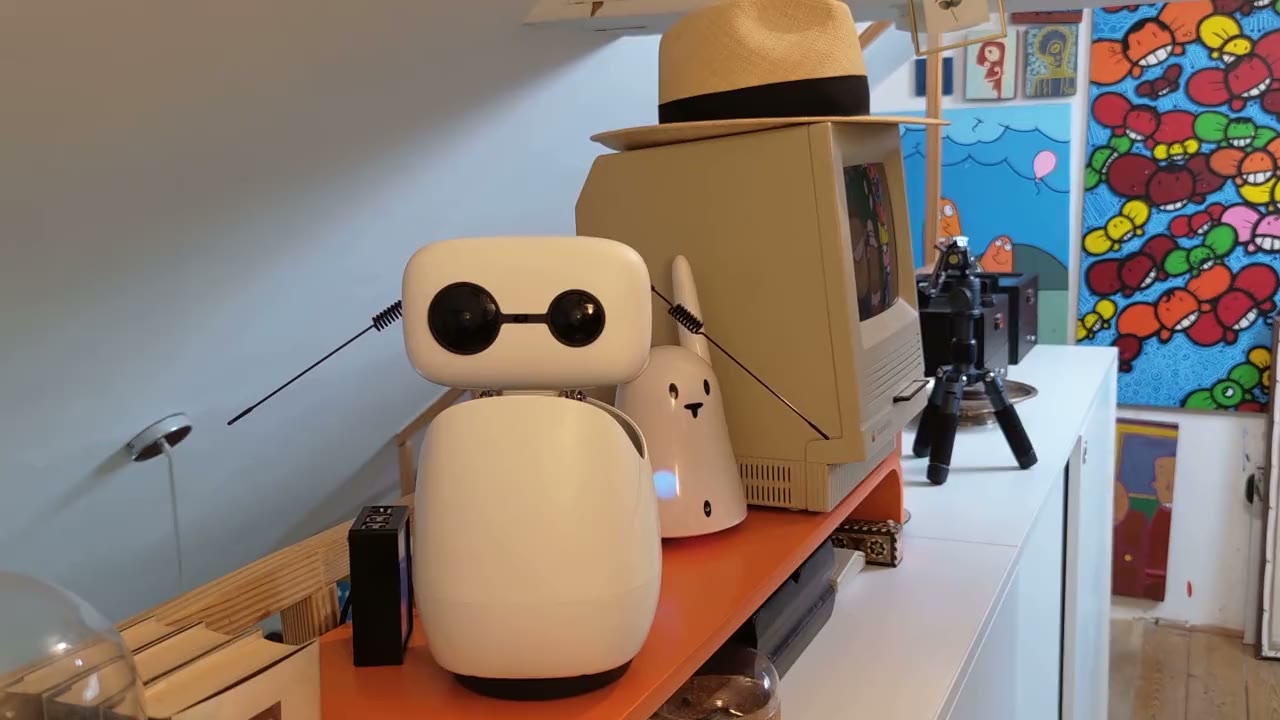
Until now, my program’s “sleep” was a posture: head lowered, motors still powered. It looked like sleep and drew power like being awake. Since 3 November, it is a real night.
What sleep does
- It stops face tracking.
- It puts the robot to bed: the head tucks in, then the motors switch off.
- During the night, my program watches the antennas itself.
- A push on an antenna wakes the robot, which goes back to presence mode.
- A sleep left recorded, after a power cut for instance, is lifted at start-up.
So that a brushed antenna does not wake it by mistake, it takes two readings in a row beyond the threshold, and the antenna must be released before it can trigger again.
The real test
- Sleep order sent, motors off two seconds later.
- Right antenna pushed: wake-up thirty-nine seconds after the sleep order, then back to presence six seconds later.
On the battery side, the difference shows: asleep, the robot lasts about three hours, against two hours awake.
Why it does not restart on its own
After a power cut, my program did not start again, even though it is set to start with the robot. I thought something was broken. It is deliberate in the robot software: the start-up app only launches after a wake-up, requested over the network or by touching an antenna. A robot that has just been switched on never moves by itself. It is a good safety rule, and the way round it is one gesture: touch an antenna.
Next
Waking up when you call it by its name.