Before the first screw: what a support channel taught me
- Log
- 2 of 25
- Date
- Reading
- 2 min read
Skills in this log
The robot arrived on 14 October 2026. Before opening the box, I did something I should do more often: I read what had gone wrong for everyone else.

The source
The maker runs a community server where owners ask for help. Its support channel held about 8,700 messages from December 2025 to October 2026: one main channel and about 290 threads. My assistant read the threads in full, about 3,300 messages, and searched the main channel by keyword. I read the summary, and checked the points that mattered against the official documentation.
Nothing below names anyone. These are patterns, not people.
What breaks, in order
On a robot assembled by hand, most failures come from three places:
| Rank | Cause | Typical symptom |
|---|---|---|
| 1 | a motor cable loose, badly seated or pinched | “missing motors”, the head or the body does not answer |
| 2 | a flat ribbon cable upside down, or its latch not fully closed | silent microphone, no camera |
| 3 | a bad flash of the computer inside | no Wi-Fi, no Bluetooth, the fan spins and nothing else |
The rest is a list of small traps, each seen several times:
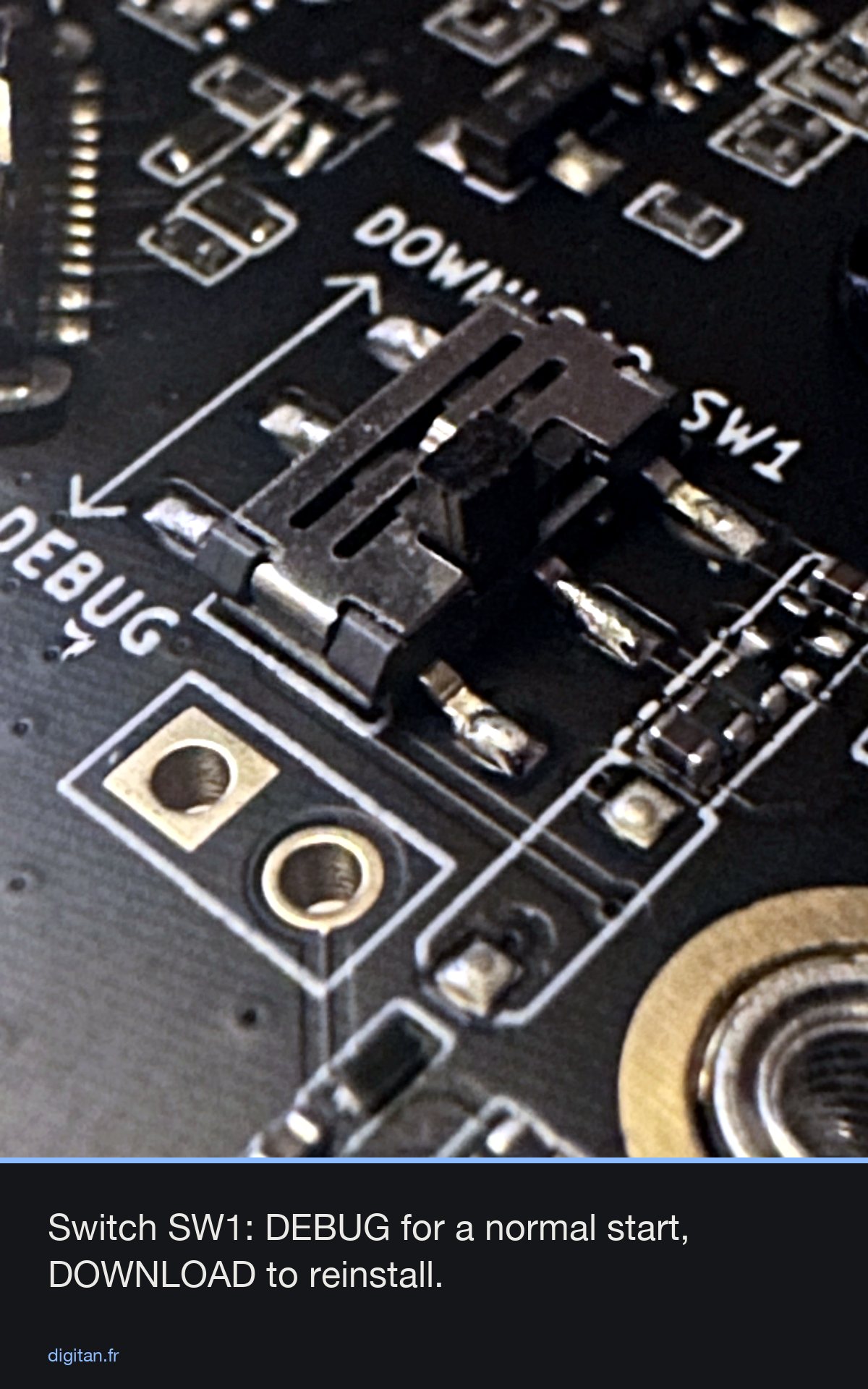
- a switch on the head board left on “download” instead of “debug”: the computer does not start;
- the wrong power brick: one robot met 24 volts and lost its power board; use the one in the box;
- screws tightened too hard: a blurry camera, an antenna that rubs, a cracked shell;
- parts “missing” that are not: one piece comes pre-attached inside the head, and the cables and screws left over at the end are spares;
- the first setup goes through the desktop app, not the phone app, on a 2.4 GHz Wi-Fi without client isolation.
And one trap that has nothing to do with robots: fake support bots answering in the channel and, a few messages later, asking for a crypto wallet. Real staff accounts never ask for money.
Did it help?
The robot booted on the first try, and the maker’s system check found it healthy. None of the traps above showed up. I cannot prove the reading is the reason, but I knew where to look before anything went wrong, and that is half the work.
Reading other people’s failures is cheaper than producing your own.
Next: the box, the assembly, and the first boot.